

No Credit Card Required
14-Day Free Trial
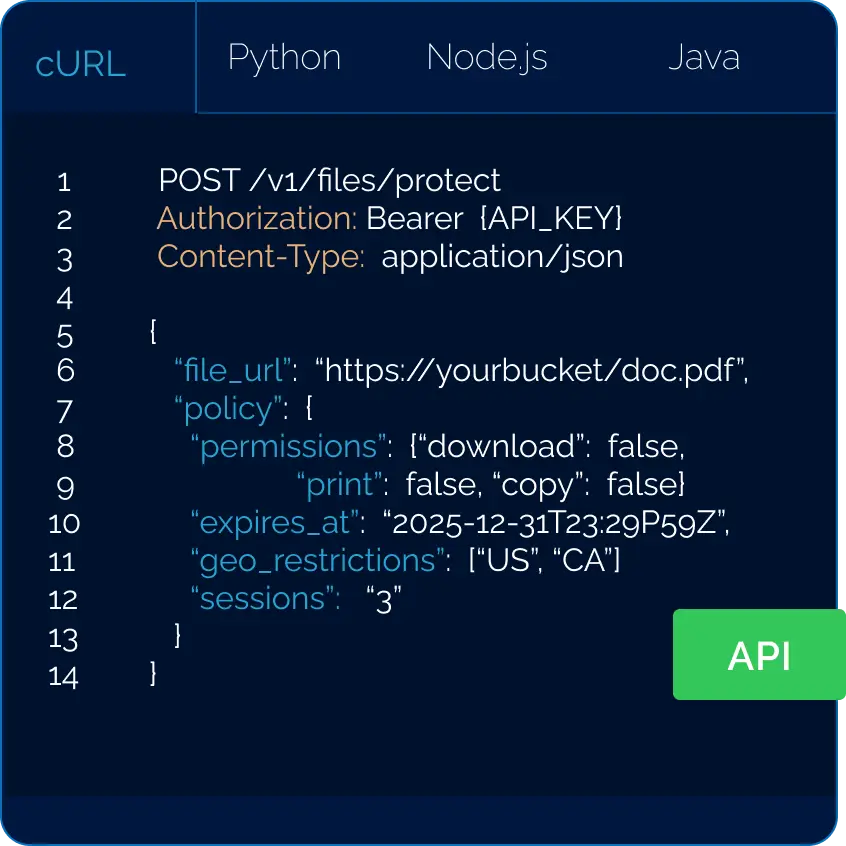
Integrate in Minutes
WHAT LOCKTERA CORE DOES
Embed persistent data protection directly into your application.
Locktera CORE gives developers APIs and SDKs to encrypt files, apply access policies, enforce view/download controls, revoke access, and capture audit activity without redesigning infrastructure.
Use CORE to protect sensitive files, AI datasets, exports, backups, evidence, customer records, and regulated content wherever they move.
Built for Modern Use Cases
Power a wide range of secure workflows with Locktera CORE.
Secure AI & RAG Workflows
Protect AI training data and enforce per-user access controls for AI retrieval systems and model inputs.
Backups & Archives
Encrypt and retain control of your backups and archives–forever, across any infrastructure.
Secure File Transfer
Replace SFTP links and presigned URLs withpersistent protection and granular access rules.
Cross-Cloud Data Protection
Move data across Azure, AWS, GCP, and on-prem environments without losing security.
Evidence Management
Secure digital evidence with immuntable audit trails and strict access controls.
Developer DRM Controls
Add license enforcement, download limits, expiration, and revocation directly in your applications.
Why Developers Choose Locktera CORE
Power a wide range of secure workflows with Locktera CORE.
Integrate in Minutes
Rest APIs and SDKs designed for rapid deployment.
Security Travels With the Files.
Protection remains attached regardless of storage location.
No Infrastructure Redesign
Add enterprise-grade securiy without changing your architecture.
Enterprise Ready
Works with Entra ID, SSO, SIEM, cloud storage, AI pipelines, and more.
Quantum-Safe By Design
Built with post-quantum cryptography for tomorrow’s threats, today.
How Locktera CORE Works
Connect
Use Locktera APIs or SDKs to connect your application, storage workflow, or data pipeline.
Protect
Encrypt files and attach access policies, permissions, expiration rules, and audit controls.
Share or Store
Move protected files across cloud storage, applications, AI workflows or external users.
Govern
Revoke access, monitor activity, enforce policy, and maintain audit visibility over time.
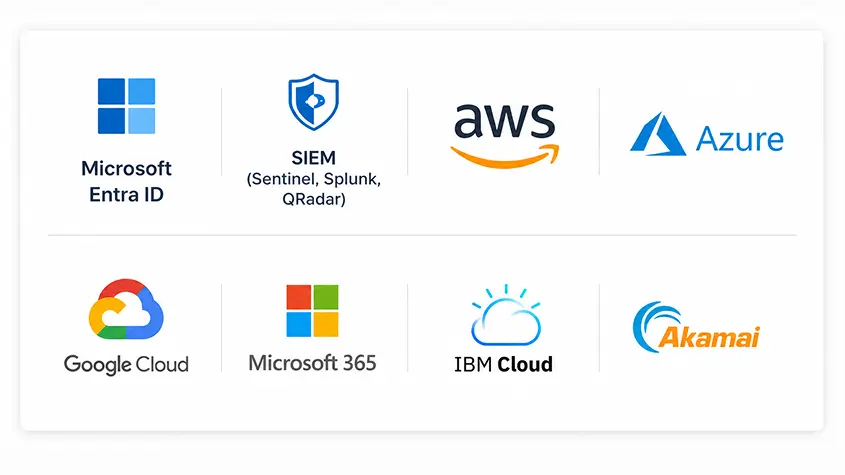
Integrate with Your Existing Storage and Identity Systems
Connect your cloud storage and identity providers in minutes. Enforce security without changing how your team works.
GDPR
HIPPA
FINRA
CCPA
CJIS
And More
See Locktera CORE in Action
See how Locktera CORE enables developers to add persistent file-level security, policy-based access control, audit logging, and governance directly into applications, AI workflows, and data pipelines.
What you’ll see:
• API integration in minutes
• File-level encryption
• Policy-based access control
• View & download permissions
• Revocation and expiration
• Immutable audit logging
• Identity & SSO integration
• Cloud storage integration
Trusted for healthcare, legal, finance, and regulated workflows.
Frequently Asked Questions
What is Locktera CORE?
Locktera CORE is a developer platform that provides REST APIs and SDKs for adding persistent file-level security directly into applications, AI workflows, storage platforms, and business processes. It enables encryption, access control, audit logging, and governance without requiring major infrastructure changes.
How quickly can I integrate Locktera CORE?
Most developers can complete an initial integration in minutes using the REST APIs, SDKs, and developer documentation. A free trial and developer sandbox are available to accelerate evaluation and implementation.
What security capabilities does Locktera CORE provide?
Locktera CORE includes:
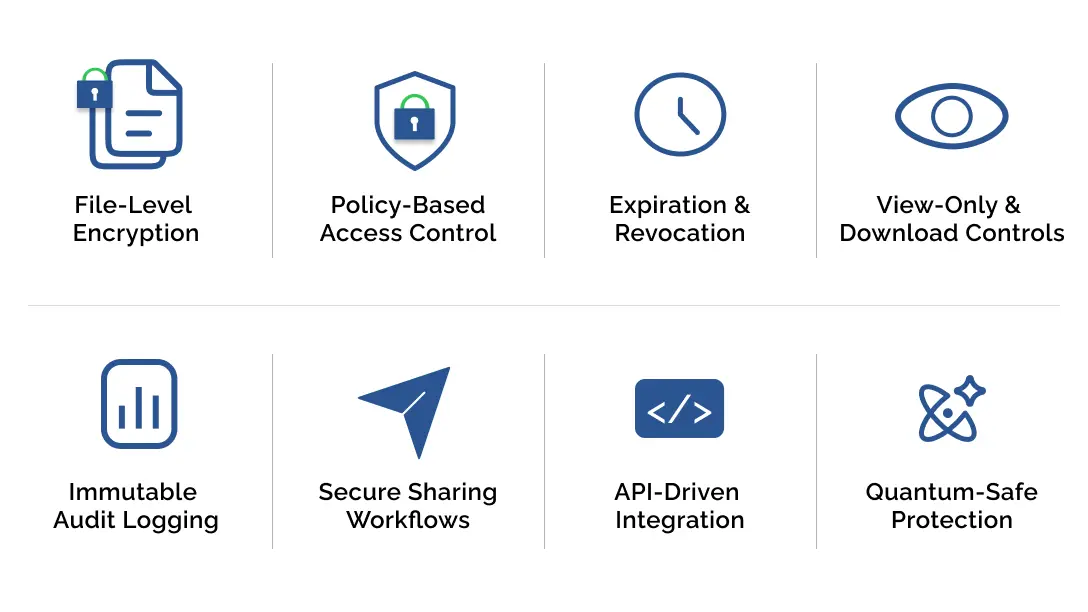
- File-level encryption
- Policy-based access control
- View-only and download permissions
- Time-based expiration
- Access revocation
- Immutable audit logging
- Identity and SSO integration
- Quantum-safe cryptography
- Encrypted deduplication
Can I revoke access after a file has been shared?
Yes. Access policies remain attached to protected files, allowing authorized users to revoke or modify permissions even after a file has been distributed.
Can Locktera CORE secure AI and RAG workflows?
Yes. Locktera CORE helps protect AI training data, retrieval sources, prompts, model outputs, and sensitive datasets by enforcing persistent security and policy controls throughout AI workflows.
Does Locktera CORE integrate with my existing infrastructure?
Yes. Locktera CORE integrates with existing cloud storage, identity providers, SIEM platforms, and enterprise applications without requiring you to redesign your architecture.
Is Locktera CORE suitable for regulated industries?
Yes. Locktera CORE is designed for organizations that require strong governance, auditability, and access control, including healthcare, legal, financial services, government, manufacturing, and AI platforms. It helps organizations support compliance initiatives such as HIPAA, GDPR, CJIS, CCPA, and FINRA.
Can Locktera CORE replace secure file transfer solutions?
Yes. Locktera CORE enables developers to build secure file transfer workflows with persistent protection, policy enforcement, audit logging, and revocable access that extends beyond traditional SFTP or presigned URLs.
How is Locktera CORE different from traditional encryption?
Traditional encryption protects data while it is stored or transmitted. Locktera CORE keeps security attached to the file itself, allowing access policies, permissions, audit logging, and governance to remain in effect wherever the file is shared or stored.
Does Locktera CORE support APIs and SDKs?
Yes. Locktera CORE provides REST APIs and developer SDKs that enable rapid integration of persistent data protection into web applications, desktop software, cloud services, AI platforms, and enterprise workflows.
Where is my data stored?
Locktera CORE supports flexible deployment models, including customer-managed cloud storage, and on-premises environments. Organizations maintain control over where their protected data resides.
Which cloud platforms and identity providers are supported?
Locktera CORE supports integration with Microsoft Entra ID, Azure, AWS, Google Cloud, Microsoft 365, SIEM platforms such as Microsoft Sentinel and Splunk, and additional enterprise storage providers.